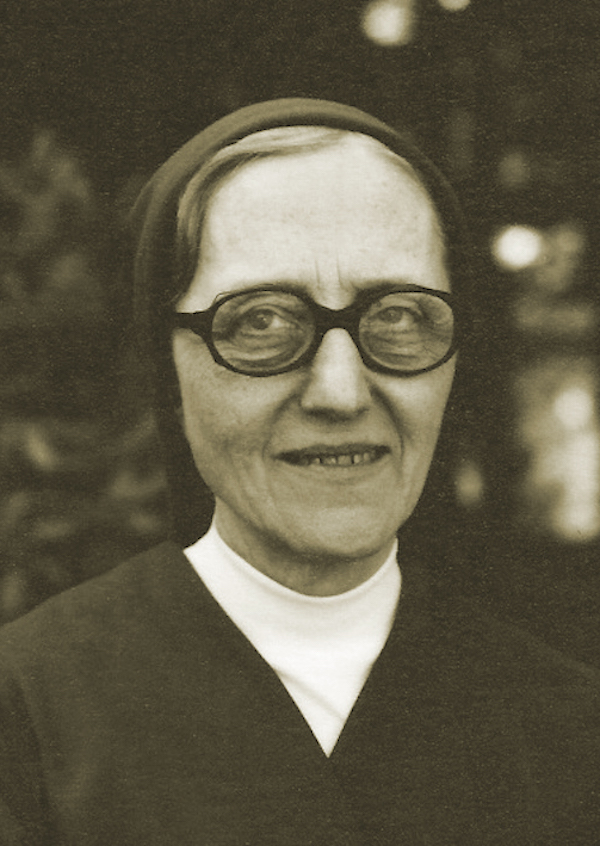
Fifty years ago – January 23, 1974 – some Daughters of Charity in Albany, New York announced a decision that made American Catholic Church history. Members of the order’s Northeast Province’s Council, they decided to grant the Albany Diocese’s Bishop Edwin Broderick’s request to appoint one of their members, 60-year-old Sister Serena Branson as Catholic Charities of Albany’s director.
Broderick believed Serena, who began the first national residential treatment program for mentally ill children – the Astor Home for Children – and started the first national residential program for developmentally delayed children – the Kennedy Child Study Center – was the right person to expand Catholic Charities’ services from three counties to all 14 in the largely rural diocese.
I described the council’s decision in my book Sisters: The Extraordinary Lives of Serena and Anna Marie Branson: Announcing they would comply with his request, Provincial Mary Basil Roarke wrote to the bishop: “’Sister Serena lives her life of service every moment of the day, finding Christ in everyone she meets!’”
Starting work in June 1974, Serena Branson became the first woman in the United States to lead a Catholic Charities agency. This little known milestone deserves to be more widely celebrated. But I’m tendentious. Serena was my aunt.
Sisters describes how Serena and her sister and fellow Daughter of Charity Anna Marie – who served Bolivia’s indigenous poor for twenty years and many regard as a saint – influenced my own social justice work.
When she came to Washington, D.C. to attend board meetings and conferences and lobby the New York congressional delegation, Serena stayed with our family when I was a boy. When, at our kitchen table, she criticized government policies that failed poor people, Serena shaped my own advocacy, especially my four decades of activism against capital punishment.
What Serena accomplished at Catholic Charities will spur others to live the Gospel more fully.
In 16 years as its director, Serena transformed the agency with five programs to one with 28, and meeting Broderick’s challenge, she expanded the agency’s services to all 14 counties. The agency’s budget when Serena began was $500,000. When she resigned in 1990, the budget was $19 million.
At 77, Serena became the agency’s director of special projects. Daunting and humbling to much younger workers, her portfolio included: writing and editing the agency newsletter, coordinating the Parish Advocacy Network, establishing and managing the Diocesan Commission on Aging and managing the DePaul Residence for homeless folk, Farano House for children with A.I.D.S., Serena House for persons with disabilities and eight apartment complexes for low-income individuals.
The force of Serena’s personality enabled her to accomplish so much. She could, some observed, charm a bird out of a tree. Saying no to Serena, the late Albany priest Michael Farano said, “was like saying no to God.” Her former executive assistant Angie DiBenardo sums up Serena’s effect: “There were things I did for that woman I would never in a million years have the nerve to do, but since I was doing for her I did it.”
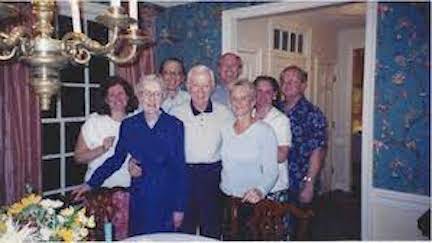
Receiving numerous honors throughout her life, Serena’s most meaningful one came in 2002, at 89 after 71 years of innovation, service and advocacy when Catholic Charities U.S.A (C.C.U.S.A.) recognized her with the Vision Award, its highest tribute.
This honor’s other recipients include: Dead Man Walking author Sister Helen Prejean, former C.C.U.S.A. president, Jesuit priest Fred Kammer and late apartheid opponent and Nobel Peace Prize winner Desmond Tutu.
As informative as Serena’s actions are to believers who want to witness to the Gospel, Serena’s speeches – given over five decades – can become scripture that provokes believers to do more for God’s reign of peace, justice, life and love.
Certain signature phrases elucidate her vision.
“People are mysteries,” she frequently said. “You don’t try to understand mysteries. You reverence them.”
For Serena we learn to love when we regard each person as an awesome, wondrous child of God. As Sister of St. Joseph Charla Commins – who has administered Catholic Charities of Albany programs for close to 50 years – said, Serena “made people feel when she was talking to them he or she was the only person that mattered.”
Serena modeled what she often urged others to do: “become transparencies of the maker.” This means not hiding our lamps under a bushel so that our good works are evident to all and glorify the creator.
To discern how best to embody Christ to others, Serena said, “We must catch the vision of what we are called to be.” This affirms God is calling all to become holy, but the creator has something special in mind for each of us that involves serving and advocating for poor and marginalized people.
One can do a group’s books, another can create marketing campaigns while someone else provides legal services, but all can speak up. “Each person gives what he or she has,” Dorothy Day said, “then a movement spreads.”
People who are “prophetic presences,” as Serena urged believers to become, will be called communists, do-gooders, bleeding hearts or liberal. These critics don’t understand their faith alone guides Catholic social justice advocates, who are neither liberal nor conservative.
When social justice activists feel they can’t endure the calumny they experience, they should remember the most challenging thing Serena said: “Once there was one who paid the price with His life. In face of this, can we dare hold on to ours?”
If you want to become a better Gospel person, follow this holy, exceptional woman’s example.
Editor’s Note: Quoted speeches are courtesy of the Daughters of Charity Province of St. Louise, St. Louis, Missouri.
I’m indebted to the Daughters of Charity’s Archives for their tremendous help with researching Sisters. As I wrote in the book’s Acknowledgments, Sisters wouldn’t have happened without their indispensable support.
Sisters can purchased here for $19.99, plus shipping and handling. Autographed copies can be obtained at my site for $25, includes shipping and handling. People in the DC area can purchase Sisters for $19.99 at Politics and Prose bookstores.
I’m available to make presentations to groups about Sisters. Please contact me if you’re interested.


 Chris Byrd
Leave a comment